
Why This Guide Matters for Buyers and Investors
When you think about buying a house in the UAE, you might picture towering buildings and sunny beaches. But actually, deciding where to buy is a big first step. The market for buying property is different in each emirate, like Abu Dhabi, Ajman, and Sharjah. Understanding these differences is key for anyone looking to invest or find a home in 2026.

For example, Abu Dhabi’s residential market is very strong. In the first three months of 2026, property deals went up by a lot compared to the year before, and prices for apartments and villas also rose [https://www.zawya.com/en/business/real-estate/uae-real-estate-market-navigates-q1-2026-with-measured-growth-sustainable-trajectory-gztwv3z1].
The sales price index in Abu Dhabi also saw a big jump earlier in the year [https://reidin.com/uae-residential-property-price-report-january-2026/]. This shows a healthy return on investment (ROI) for many. On the other hand, places like Ajman have seen apartment sales prices go down slightly in June 2026 [https://reidin.com/wp-content/uploads/2026/07/UAE-RESIDENTIAL-PROPERTY-PRICE-REPORT_202606.pdf]. Sharjah’s market is also growing fast, with many properties sold in early 2026 due to strong demand [https://www.facebook.com/OneInvestments/posts/sharjahs-real-estate-market-recorded-aed656-billion-1786-billion-in-transactions/1927507827920395/].
These market changes affect what kind of ownership you can have, any taxes you might pay, and how much money your property could make over time. Whether you are looking for a plot of land for sale Abu Dhabi or considering a villa for sale in Sharjah, knowing these details makes a big difference. If you’re looking for a building for sale in Ajman, you need clear information.
High-net-worth buyers and international investors need more than just listings. They need a trusted, step-by-step guide to help them navigate the market. This guide is made for people like you who want to confidently buy house in Abu Dhabi or understand how to buy Dubai property. We will give you simple explanations about legal rules, different ways to get money for your purchase, how to find good properties, a checklist for checking everything carefully, and a clear plan for closing the deal.
This article will break down all the complex parts of buying property in the UAE into easy steps. We want you to feel smart and secure about your investment.
If you’re also thinking about property in Dubai, you might find it helpful to talk to an expert.
FREE Dubai Real Estate Consultation
In 2026, the property market across the UAE shows unique characteristics in each emirate. For buyers, especially those looking to invest a lot of money or from other countries, understanding these differences is very important. Let’s look closely at Abu Dhabi, Ajman, and Sharjah.
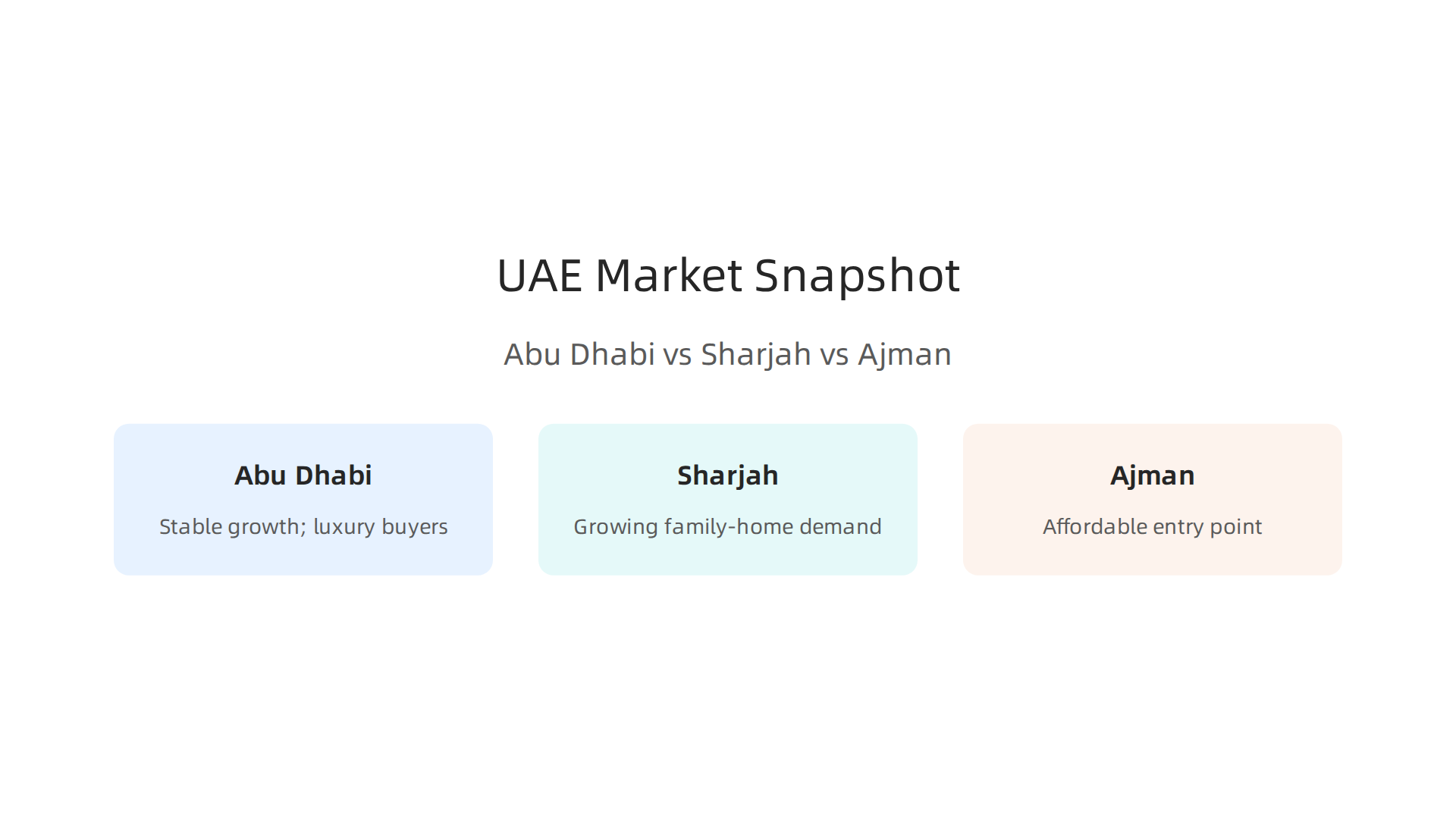
Abu Dhabi: Stable Growth and Luxury Appeal
Abu Dhabi continues to be a top choice for high-net-worth individuals and international investors. The emirate is known for its strong, stable market and offers many chances to buy house in Abu Dhabi. These buyers are often looking for luxury homes and long-term investments. In February 2026, average property prices in Abu Dhabi reached AED 1,850 per square foot, showing a solid 9.5 percent rise year-over-year Institutional Data – The Complete Real Estate Market report ….
The main reasons people want to buy here are the strong economy, clear rules for ownership, and many important projects that attract more people and businesses. Most buyers are interested in high-end apartments and luxury villas, often with great services. Popular areas include Saadiyat Island and Yas Island, where you can find prime waterfront properties. Investors usually have a long-term view, expecting steady returns. Many also consider a land for sale Abu Dhabi to build custom, exclusive homes. The market keeps growing, with property values rising across different segments 2025 Annual Market Report.
Sharjah: Growing Demand for Family Homes
Sharjah’s property market is active and growing, especially appealing to families and those seeking more affordable options than Abu Dhabi or Dubai. Demand here is high due to people looking for more space and value, along with a quiet place to live. Many buyers are middle-income families or investors looking for stable rental income. You can find a good mix of apartments and bigger homes, like a villa for sale in Sharjah, in areas close to schools and community services. The market here benefits from strong demand and new freehold rules that make it easier for people from outside the UAE to buy property. Investments in Sharjah are often for the medium term, with good potential for rental returns as the population keeps growing.
Ajman: Affordable Entry Point
Ajman offers a more budget-friendly way to enter the UAE property market. It is often chosen by those looking for lower prices and a more relaxed lifestyle compared to its busier neighbors. For example, property prices in Ajman have shown some changes in 2026, with apartment sales indexes decreasing slightly UAE Sale & Rent Property Prices & Real Estate Index – Dubai. This could mean good opportunities for buyers looking for deals.
The main buyers in Ajman are usually those with a smaller budget, often local residents or smaller investors. They typically look for apartments or sometimes a building for sale in Ajman for future development. Ajman is attractive because of its lower cost of living and simpler rules for property buying. While property growth might not be as fast as in Abu Dhabi, it can offer good returns for those who are patient and have a longer investment plan.
Choosing the Right Emirate for Your Investment
For high-net-worth individuals and international investors, Abu Dhabi remains a top choice for luxury and long-term capital growth. Sharjah offers a balanced option with good family homes and strong rental income potential. Ajman is best for those seeking affordability and a quieter pace. Each emirate has its own strengths and fits different buyer goals. Knowing these trends helps you make a smart choice. If you’re also wondering How to Buy Property in Dubai as a Foreigner, remember that Dubai has its own distinct market, often leaning towards luxury and high returns, much like Abu Dhabi but with an even greater global reach.
After looking at the different property markets in each emirate, it’s just as important to understand the rules of who can buy and what kind of ownership you get. Each emirate in the UAE has its own specific laws about buying property, especially for people from other countries.
What Kinds of Ownership Are There?
When you buy a house in the UAE, you might not always own it in the same way you would in your home country. There are a few main types of property rights:
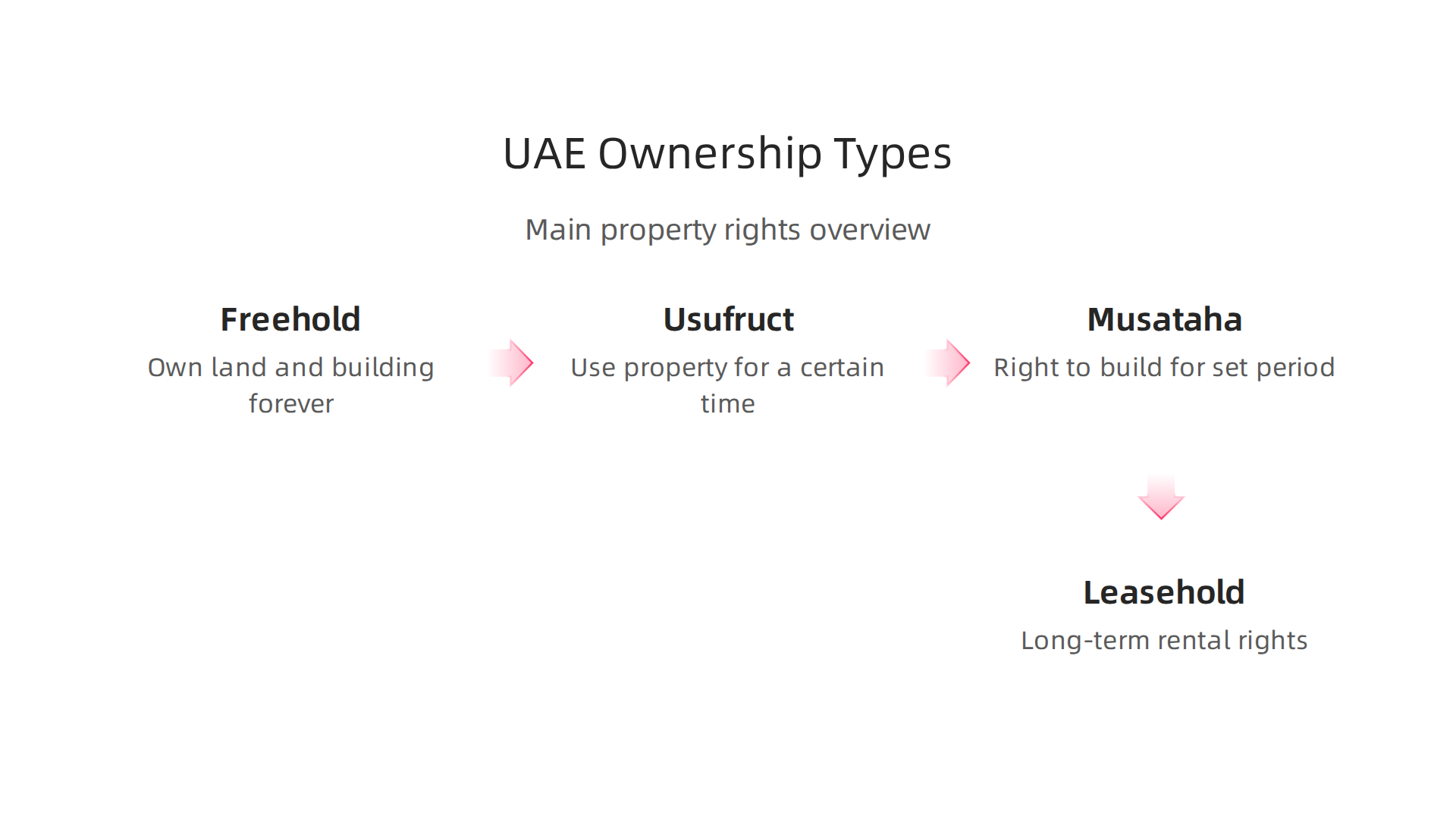
- Freehold: This is the most complete type of ownership. It means you own the land and the building on it forever. You have full rights to the property The Real Estate Law Review.
- Usufruct: With this, you get to use a property for a certain time, often for many years. You can live there or rent it out to make money. But you don’t own the land itself UNITED ARAB EMIRATES LAND SECTOR A SNAPSHOT.
- Musataha: This is similar to usufruct, but it also gives you the right to build on the land for a set period. Once the time is up, the buildings become the property of the landowner Real Estate 2026 – UAE – Global Practice Guides – Chambers.
- Leasehold: This is like renting for a very long time, often up to 99 years. You don’t own the property but have rights to use it for the lease term.
Who Can Buy Property in Each Emirate?
The rules for who can buy property can change a lot from one emirate to another.
Abu Dhabi:
If you want to buy house in Abu Dhabi, the rules depend on where the property is. People from other countries (expats) can usually buy apartments and floors, but not the land itself. This ownership is often for a period, like 99 years, and only in certain areas called "Investment Areas" Expatriates buying a property in the UAE. If you are a UAE citizen or from another GCC country, you have more freedom to buy land for sale Abu Dhabi in most areas INVESTING IN THE.
Sharjah:
Sharjah has become more open for foreign buyers. New rules now make it easier for people from outside the UAE to own freehold properties here, especially if they are looking for a villa for sale in Sharjah. This helps make Sharjah a popular spot for families and investors.
Ajman:
Ajman also has specific rules. UAE and GCC citizens can own freehold land in Ajman Dubai & United Arab Emirates: Jointly Owned Property. For foreign buyers, there are often designated areas where they can buy properties, typically apartments or villas, but direct freehold ownership of land may be limited. If you are looking to buy a building for sale in Ajman for investment, it is very important to check the local laws carefully.
Important Steps Before You Buy
No matter which emirate you choose, it’s very important to do your homework. You need to check all the legal documents and property records before you agree to buy anything. This means:
- Verifying Ownership: Make sure the seller truly owns the property and has the right to sell it.
- Checking for Debts: See if there are any loans or other financial claims against the property.
- Understanding Contracts: Have a lawyer look over all buying agreements to make sure they are fair and legal.
- Registering Your Purchase: After buying, you must register the property in your name with the official land department in that emirate. This is how your ownership becomes official.
Getting help from someone who knows the local real estate laws well can save you a lot of trouble.

A good agent can guide you through the process and help you understand the specific requirements for different emirates. Knowing what a real estate agent does and why you need one in 2026 can make your buying journey much smoother.
When you decide to buy a house in Abu Dhabi or any other emirate, a big part of the plan is figuring out how to pay for it. Most people need a loan, called a mortgage. The rules for getting a mortgage can be a bit different if you are from another country, but it is certainly possible in 2026.
Getting a Mortgage as a Foreign Buyer
Yes, people from other countries can get home loans in the UAE, especially if the property is in a special "freehold" area. However, the rules are often different from what UAE citizens or residents might expect.
- Loan Amount and Down Payment: If you are not a resident of the UAE, banks usually lend you less money compared to residents. For example, a non-resident might get a loan for about 50% to 65% of the property’s price. This means you would need to pay the rest as a down payment, which could be 35% to 50% upfront How to get a mortgage in Abu Dhabi as a non-resident.

For UAE residents, the loan amount can go up to 75% or 80% for properties under AED 5 million Buying Property in Abu Dhabi as an Expat: Complete Step- ….
- Income Requirements: To qualify for a mortgage, banks will look at your income. For non-residents, you might need to show a higher income, sometimes around AED 25,000 to AED 30,000 per month, or the equivalent in your home currency Mortgage for Non-Residents in UAE: Everything You Need to Secure Financing Abroad. Banks will ask for proof like recent payslips and bank statements from the last 6 to 12 months.
- Documents Needed: Expect to provide a valid passport, proof of address, and sometimes an Emirates ID if you have one. You will also need to show your credit history. Finding a good loan when you want to buy house in Abu Dhabi can depend a lot on having all these papers ready.
- Emirate and Bank Differences: Rules can vary a bit from one emirate to another, and even from bank to bank. Some banks might have stricter rules or specific countries they prefer to lend to for non-resident mortgages Mortgage in Dubai for Non-Residents: Eligibility, Banks & More – MyBayut. It’s a good idea to look into financing options for buying property in Abu Dhabi in 2026 to see what different banks offer.
Other Ways to Pay for Your Property
Not everyone gets a bank mortgage. Here are some other ways people pay for property:
- Developer Financing: Sometimes, when you buy a new home directly from the company that built it (the developer), they might offer their own payment plans. This can be helpful if you want to buy property in Dubai and are looking at new projects, as developers often have flexible options. These plans might not always be available for a building for sale in Ajman or a villa for sale in Sharjah.
- Private Lenders: A few companies or wealthy people might lend money for property purchases. These loans can sometimes be easier to get but might come with higher interest rates or different terms.
- Cash Purchase: If you are a high-net-worth individual (HNWI), meaning you have a lot of money, you might choose to buy your property outright with cash. This avoids all the loan application steps and interest payments. However, you still need to prove where the money came from to follow anti-money laundering laws.
Things to Think About When Financing
When you’re trying to buy house in Abu Dhabi, there are a few extra things to keep in mind, especially if you’re an international buyer:
- Currency and Interest Rates: If your income is in a different currency than the UAE Dirham, the value of your payments can change if exchange rates go up or down. Also, interest rates can change over time, making your monthly payments higher or lower.
- Cross-Border Taxes: You might need to consider tax rules in both the UAE and your home country. It’s best to talk to a tax expert to understand any taxes on property income or if you sell the property later.
Getting good advice from a financial expert who knows about UAE property rules is very important. They can help you understand all the details and choose the best way to finance your new home. For more insights on apartments for sale in the capital, explore our guide on Abu Dhabi apartments for sale 2026 buyer insights and forecasts.
Once you have a good idea of how to pay for a home, the next big step is finding the right one. This is like being a smart investor, not just a buyer. You need to know where to look and how to tell a good deal from one that is not so good. This is especially true when you want to buy house in Abu Dhabi, where there are many great choices.
Where to Find Great Property Listings
Finding high-quality homes means knowing the best places to search. You want to look for listings that are checked and true, especially for luxury properties.
- Special Online Places: There are websites made just for luxury homes. These sites often have special listings for places like Palm Jumeirah in Dubai. They focus on detailed information and pictures to help you see the real value.
- Real Estate Experts: Working with a trusted real estate agent is very important. They have special access to homes that might not be listed everywhere.

They can help you find verified luxury homes and even find expert Dubai property dealers.
- Property Developers: For new homes, go straight to the company that built them. Developers often have their own sales offices and can show you future projects or homes that are not yet on the open market. This can be a great way to find a villa for sale in Sharjah or even a building for sale in Ajman.
How to Check Out Each Property
Once you find some homes you like, you need to look at them closely. Think like an investor and consider these points:
- Location, Location, Location: This is super important. Is the home near schools, shops, work, or fun places? How easy is it to get around? A good location makes a home more valuable. For example, some people might want land for sale Abu Dhabi in a quiet area, while others prefer the city buzz.
- Who Built It?: The company that built the home, called the developer, matters a lot. Do they have a good name? Do they build quality homes? You want to know that your home is well-made and that the developer will stand by their work. This is key for how to buy Dubai property.
- What Services Come With It?: Many luxury homes come with nice services like gyms, pools, or special security. Think about how these services will make your life better. Also, check how much these services cost each year.
- What Kind of Life Will You Have There?: Imagine living in the home. Does it fit your dreams? Does it offer the kind of lifestyle you want? This is more than just how the house looks; it is about how you will feel living there.
How to Know if a Property is a Good Deal
Investors look at numbers to make sure they are getting a good deal.
- Looking at Similar Homes (Comparables): See what other similar homes in the same area have sold for recently. This helps you know if the price of the home you like is fair.
- How Much Money Can it Make (Yield): If you plan to rent out the property, calculate how much rent you could get each year. Then, compare that to the price of the home. This helps you see if it’s a good investment. You can learn more about this by exploring Palm Jumeirah real estate investment 2026.
- Things to Watch Out For (Red Flags): Be careful if a price seems too good to be true. Also, if a home has been for sale for a very long time, or if there are many repairs needed, these could be signs of trouble. Always ask many questions and get a detailed inspection of the property.
Finding the right home is a big choice, and thinking like an investor can help you make a smart move.
If you are looking to buy house in Abu Dhabi or explore luxury properties in other emirates, getting expert advice can make a huge difference.
Connect with Ayaz Salman for a FREE Dubai Real Estate Consultation.
Finding the right home is a big choice, and thinking like an investor can help you make a smart move. After you have found properties that look good and seem like a good deal, the next crucial step is to check everything very carefully. This is called "due diligence." It is like doing your homework to make sure there are no surprises later. This is super important when you want to buy house in Abu Dhabi or any other place in the UAE.
Legal Due Diligence: Making Sure Everything is Official
The first check is all about the paperwork and who truly owns the property. You need to make sure the seller can legally sell the home and that you will truly own it without any problems.
- Property Title: This is the document that shows who owns the home. You need to verify it is clean, meaning no one else has a claim to it. You also need to confirm that the seller is the legal owner.
- Encumbrances and Liabilities: This means checking if there are any debts or legal claims attached to the property. For example, if the previous owner owed money and used the home as a guarantee, that debt could transfer to you. It is important to find this out beforehand.
- Outstanding Fees and Approvals: Make sure all service charges and other bills related to the property are paid up. When you buy house in Abu Dhabi, there are also transfer fees. In Abu Dhabi, buyers usually pay a 2% transfer fee to register the ownership with the Department of Municipalities and Transport (DMT) in 2026, plus other small registration fees 2026. This fee can sometimes range from 1% to 4% depending on the project type, so always confirm this specific amount with your real estate agent. Foreigners can transfer property ownership by submitting a Sale and Purchase Agreement, title deed, and a No Objection Certificate (NOC) to the DMT, then paying the transfer fee, according to experts in 2025. It is also good to check if all parts of the home, like any added rooms, have the right government approvals. To understand all the taxes and fees, checking guides on Abu Dhabi property tax 2025 can be very helpful.

Technical Inspections: Checking the Home’s Health
Just like you’d take a car for a mechanic to check, you should have an expert look at the home’s structure and systems. This is especially true for luxury units or a beautiful villa for sale in Sharjah.
- Structural Checks: An inspector will look for cracks in walls, problems with the foundation, or issues with the roof. These can be very expensive to fix later.
- MEP Systems: This stands for Mechanical, Electrical, and Plumbing. The inspector will check if the air conditioning works, if the wiring is safe, and if the pipes are leaking.
- Service-Level Checks: For luxury homes, especially in complexes or towers, check the quality of shared services like elevators, swimming pools, and security systems. If you’re looking at a larger property like a building for sale in Ajman, these checks become even more detailed.
Financial Checks: Understanding the Costs
Beyond the purchase price, homes come with ongoing costs. As a smart buyer, you need to know what these will be.
- Service Charges: These are monthly or yearly fees paid for the upkeep of common areas, like cleaning, security, and maintenance of pools or gyms. Make sure you understand how much they are and if they are likely to change. Hidden costs and service charges are an important part of knowing the full price of property in Abu Dhabi.
- Sinking Funds: This is money set aside for big repairs or upgrades to the building in the future. Knowing how much is in this fund and how it’s managed is important, especially for an apartment building.
- Rental History: If you plan to rent out the property, look at how much rent it has earned in the past. This helps you guess future income and see if it’s a good investment.
- Projected Carrying Costs: Add up all the fees and costs you expect to pay each year, including service charges, potential loan payments, and insurance. This helps you truly understand the cost of owning the property. For those interested in buying land for sale Abu Dhabi, understanding the carrying costs even before building is crucial. The total fees and taxes when buying property in the UAE in 2026 can range from about 7% to 12% of the purchase price, depending on if you pay cash or get a mortgage.
Doing these checks helps you feel sure about your choice and avoid any surprises after you have purchased your new home. Knowing all the details is key when you want to buy house in Abu Dhabi and make a safe investment.
After doing all your checks and making sure the property is a good fit, the next big step is to make the purchase official. This is often called "closing the deal." It means going through the final paperwork and payments to make the home legally yours. It is a very important part of buying a house in Abu Dhabi.
Step-by-Step Closing Workflow
The process of buying property usually follows a few main steps:
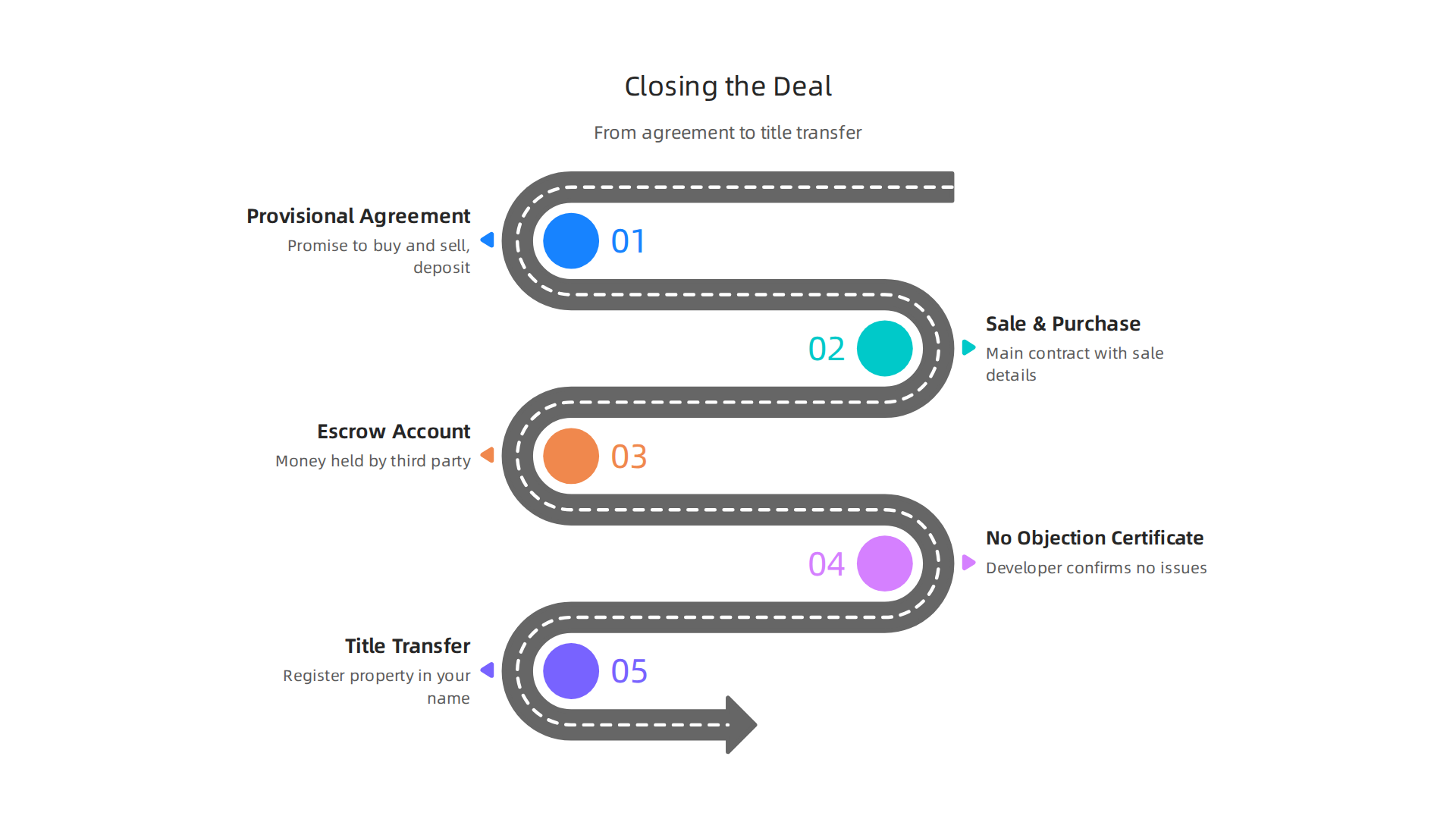
- Provisional Agreement: First, you and the seller sign a provisional agreement. This is like a promise to buy and sell, and it usually involves a deposit. This agreement sets the rules for the sale before you move to the main contract.
- Sale and Purchase Agreement (SPA): This is the main contract. It lists all the details of the sale, like the price, what is included, and the dates for payment and handover. It is a serious legal document.
- Escrow Account: Often, your money for the property will be held in a special bank account called an escrow account. This account is managed by a third party, like a lawyer or the land department, to make sure both the buyer and seller follow through on their promises before the money is released. This protects both sides.
- No Objection Certificate (NOC): Before you can take full ownership, the property developer or building management needs to issue a No Objection Certificate. This simply means they confirm that the seller has paid all their service charges and there are no outstanding issues with the property. This is a must-have document for the transfer of ownership, especially for foreigners who want to transfer property ownership in Abu Dhabi, as noted by experts in 2025.
- Title Transfer: The final step is to officially register the property in your name with the government. In Abu Dhabi, this is done through the Department of Municipalities and Transport (DMT) or its online service, DARI. Once this is done, you get a new title deed, which is the official proof that you own the home. The documents needed for this final transfer usually include identification for both buyer and seller, the original Sale and Purchase Agreement, and proof that all outstanding payments like service charges have been made.
All Anticipated Fees When You Close
Buying a property in the UAE involves several fees beyond the simple purchase price. Knowing these helps you plan your budget.
- Registration Fees: When you buy a house in Abu Dhabi, you will pay a transfer fee to register the ownership. In 2026, this fee is typically 2% of the property’s sale price, paid by the buyer, though some government-backed projects might have fees ranging from 1% to 4%. You will also pay a standard fee of about AED 1,000 to get your title deed, plus other small administrative costs. These fees are a required part of the process when buying property in Abu Dhabi.
- Agency/Finder Fees: Most real estate agents charge a commission for their services. In Abu Dhabi and Dubai, this fee is usually around 2% of the property’s purchase price, plus Value Added Tax (VAT). It is important to discuss this with your agent early on. If you are looking for tips on these fees, you can learn more about real estate agent commission Dubai Palm Jumeirah fees explained.
- Notary or Legal Fees: While not always mandatory for simple transactions, many buyers choose to hire a lawyer to review contracts and ensure everything is correct. Legal fees can vary depending on the lawyer and the complexity of the deal.
- Mortgage Registration Fees: If you are getting a home loan, you will also need to pay a fee to register the mortgage with the land department. This is usually around 0.25% of the loan amount, plus some additional costs.
- Total Costs: Overall, the total fees and taxes when you buy property in the UAE in 2026 can be anywhere from 7% to 9% of the purchase price if you pay cash, or even 9% to 12% if you get a mortgage, according to experts. For example, in Abu Dhabi, foreign nationals can own property in designated "investment areas" through various systems like freehold (full ownership for a limited time), usufruct (right to use property for a limited time and derive income), or Musataha (right to use property for a limited time and to construct buildings).
Typical Timelines and Common Bottlenecks
The time it takes to close a property deal can differ. Simple, ready-to-move-in properties often close faster, maybe in 30 to 60 days. Off-plan properties, which are still being built, will take much longer, depending on the construction schedule.
Some things can slow down the process:
- Getting a NOC: Sometimes, getting the No Objection Certificate from the developer can take time, especially if there are any unpaid service charges by the seller.
- Bank Delays: If you are getting a mortgage, the bank’s approval process can add weeks to the timeline.
- Cross-Border Buyers: For people buying from another country, coordinating documents and payments can take extra time due to different time zones and legal requirements. For these situations, understanding how to buy property in Dubai foreigners 2026 ownership guide can be very helpful.
- Developer Approvals: If you are buying a villa for sale in Sharjah or a building for sale in Ajman in a master development, there might be additional steps to get developer approvals.
Working with a skilled real estate agent can help you navigate these steps smoothly and avoid delays. They can guide you through all the specific rules for buying property in Abu Dhabi.
If you are looking to buy, sell, rent, or invest in properties in Dubai and need expert guidance, consider a FREE Dubai Real Estate Consultation.
Once you have completed the purchase and the home is legally yours, the journey of property ownership in Abu Dhabi truly begins. Now, your focus shifts to how to best manage your new asset to make sure it grows in value and brings you good returns.
Getting the Most Out of Your Property: Rental Strategies
After you buy a house in Abu Dhabi, you generally have two main choices for renting it out: short-term rentals or long-term leases.
- Short-Term Rentals: This is like renting your property to tourists or business travelers for a few days or weeks. Think of it like a hotel stay. This can bring in more money, especially for luxury properties in popular areas. But it also means more work, like finding new renters often, cleaning, and managing bookings.
- Long-Term Leases: This means renting your property to one tenant for a year or more. It is less work because you do not have to find new renters as often. The income is usually more stable, but it might be less than what you could get from short-term rentals.
No matter which way you choose, you will need to manage the property. This can mean doing it yourself or hiring a property management company. A company can handle everything from finding tenants and collecting rent to fixing problems. This is especially helpful if you do not live in Abu Dhabi full-time.
Keeping Track of Your Investment: Key Performance Metrics
To know if your property is doing well, you need to track a few important numbers. These numbers help you understand your Return on Investment (ROI).
- Net Yield: This is how much money you make from rent after paying all your costs, like service fees and management. It helps you see the actual profit from your rental income.
- Occupancy Rate: This tells you how often your property is rented out. A high rate means more income, while a low rate means lost money.
- Appreciation: This is how much your property’s value goes up over time. In 2026, the Abu Dhabi residential sales price index saw a significant increase, showing good appreciation potential for properties in the emirate UAE Residential Property Price Report – January 2026 – REIDIN.
Keeping an eye on these numbers helps you make smart choices for your property. For instance, in Q1 2026, Abu Dhabi’s residential market saw around 7,800 deals, with average apartment and villa sales prices growing quarterly, suggesting a strong market for investors UAE real estate market navigates Q1 2026 with measured growth, sustainable trajectory. You can also look into specific market reports like the Abu Dhabi Residential Market Review for more details.
If you are thinking about owning apartments, understanding the market trends and forecasts for specific areas can give you an edge. You can find more detailed information on Abu Dhabi apartments for sale 2026 buyer insights and forecasts.
When to Sell: Exit Strategies and Timing
Thinking about when to sell your luxury property is an important part of your investment plan. This is called an "exit strategy."
- Market Conditions: You want to sell when property prices are high. Checking reports on price trends helps you decide. For example, some areas like Sharjah have seen strong growth, with transaction values rising significantly in 2025 and Q1 2026 Sharjah’s real estate market recorded AED65.6 billion ….
- Personal Goals: Your own needs can change. You might want to sell if you need the money for something else or if you want to buy a different type of property, like a villa for sale in Sharjah or a building for sale in Ajman.
- Long-Term vs. Short-Term: Some investors plan to hold onto their property for many years to get the most appreciation. Others might buy, fix up, and sell quickly.
Deciding when to sell can make a big difference in how much profit you make from your investment. Always keep an eye on what the market is doing and what your personal financial goals are.
Summary
This guide breaks down buying property in the UAE in 2026, focusing on how Abu Dhabi, Sharjah and Ajman differ for buyers and investors. It explains who typically buys in each emirate, the main ownership types (freehold, usufruct, musataha, leasehold), and the specific rules that affect foreigners. You will learn practical financing options, including mortgage expectations and alternative payment methods, plus how to find verified listings and work with agents. The article gives a clear due diligence checklist—legal, technical and financial checks—to avoid surprises, then walks you through the closing workflow and typical fees. Finally, it covers post-purchase ownership: rental strategies, performance metrics and exit planning so you can make informed investment decisions and confidently complete a UAE property purchase.