Introduction
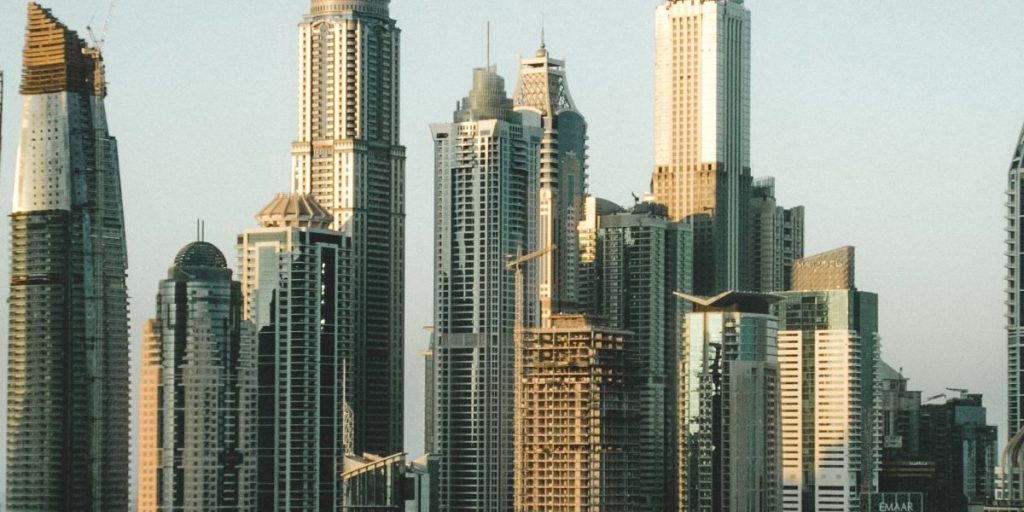
Are you thinking about buying property in the UAE in 2026? You are not alone. The UAE property market keeps drawing buyers from all over the world. In 2025, the market hit new highs with over 200,000 property transactions and total sales value reaching AED 541.5 billion. Residential prices climbed about 12% that year. And the momentum has carried into 2026. January 2026 alone saw AED 72.4 billion in residential sales, the highest single month ever recorded in Dubai.
Palm Jumeirah stands out as a top choice for luxury buyers. This famous island offers waterfront villas, high-end apartments, and a lifestyle that few places can match. But with so many options and constant market shifts, making the right choice can feel overwhelming.
Here is the thing: high net worth buyers like you often face information overload. You have to sort through countless listings, understand price trends, check developer track records, and figure out legal rules. One wrong move can cost a lot of money. That is why you need a trusted guide that brings everything together in one place.
This article gives you data driven insights, clear legal guidance, and actionable steps for investing in UAE property. We focus on Palm Jumeirah because it is one of the strongest performing areas in Dubai. Whether you want a dream home or a smart investment, we help you cut through the noise.
Check out our detailed Palm Jumeirah real estate guide 2026 prices trends and buying tips to see current prices and top tips for buyers. And if you are ready to take the next step, get a FREE Dubai Real Estate Consultation with an expert who knows the market inside out. No pressure, just honest advice.
Current Market Dynamics for UAE Property in 2026
The momentum from 2025 has carried strongly into 2026. January alone set a record with AED 72.4 billion in residential sales, the highest single month Dubai has ever seen. This shows that demand for property in the UAE isn’t slowing down. It’s just changing shape.
Here is what’s happening right now.
The post-pandemic recovery and the Expo 2020 legacy have turned Dubai into a true global real estate hub.

People from all over the world see it as a safe place to park money and live well. That trend hasn’t faded. In fact, it’s getting stronger, especially at the top end.
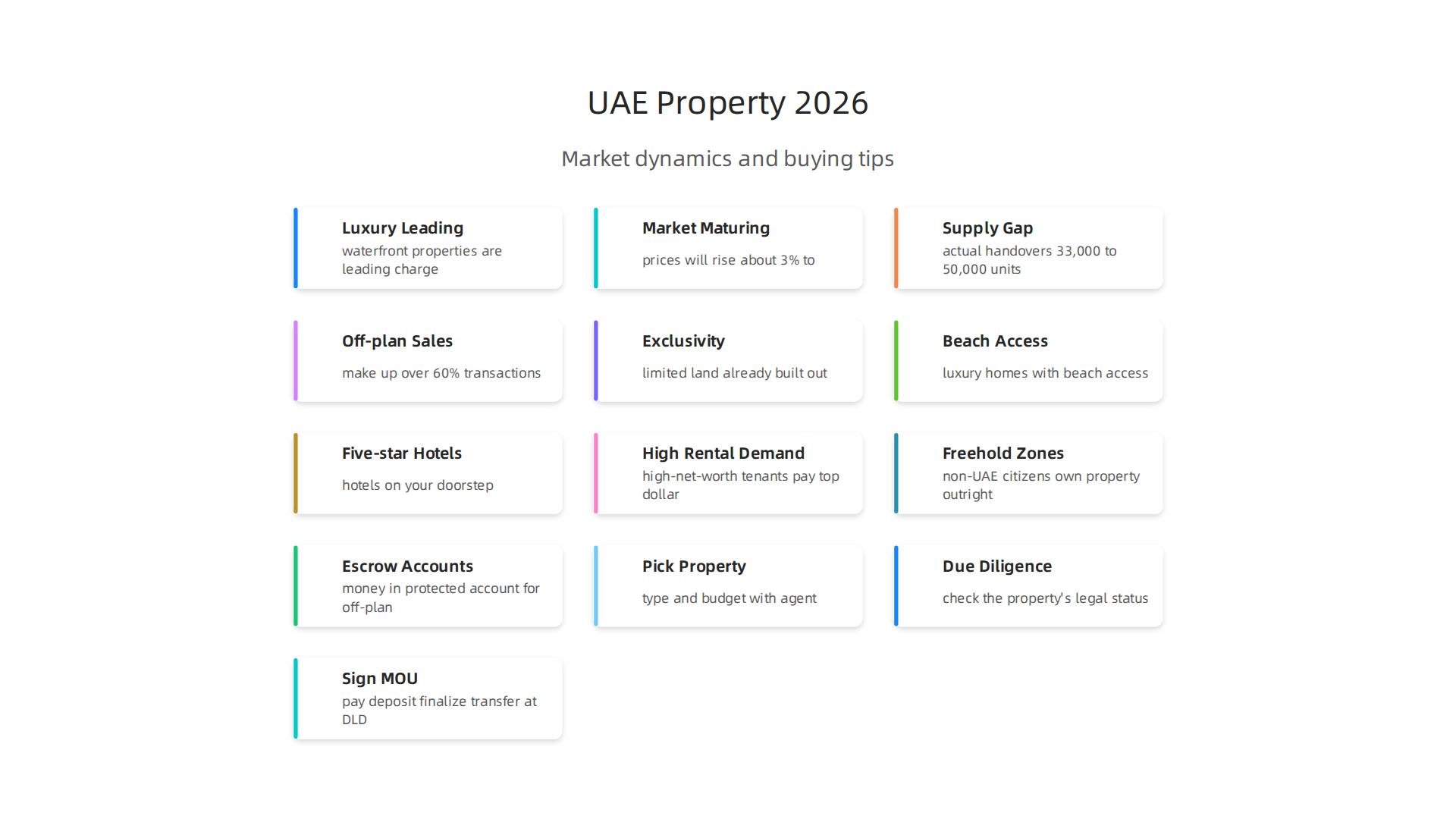
Luxury waterfront properties are leading the charge. And Palm Jumeirah remains one of the hottest spots. According to the latest market analysis, Palm Jumeirah is among the top three Dubai neighborhoods with the fastest rising prices, with annual appreciation between 12% and 18%. The scarcity of waterfront villas combined with steady global buyer interest keeps prices climbing even as the broader market cools a bit.
Speaking of cooling, the market is shifting from a wild growth phase to a more measured pace. Most forecasts suggest UAE property prices will rise about 3% to 5% in 2026, down from the double-digit gains of recent years. That’s actually healthy. It means the market is maturing. Buyers are becoming more selective. They care more about location quality, developer reputation, and long-term livability.
Inventory is another big piece of the puzzle. Around 110,500 new residential units are expected to be delivered in Dubai in 2026, but past trends show actual handovers may be closer to 33,000 to 50,000 units. That supply gap helps keep prices steady in desirable areas like Palm Jumeirah. Off-plan sales now make up over 60% of all transactions, which shows investors are betting on future value.
For buyers eyeing Palm Jumeirah right now, the fundamentals are strong. Demand continues to outpace supply in prime waterfront locations. New project launches are happening, but the really exclusive spots remain limited. If you want a deeper look at how to play this market, check out our guide on Palm Jumeirah investment 2026 market trends and strategies. It breaks down what’s working and what’s not.
The key takeaway? The luxury segment is still driving the market. And Palm Jumeirah sits right at the center of it. Understanding these dynamics helps you make smarter decisions whether you’re buying a home or building a portfolio.
Why Palm Jumeirah is a Premier Investment Destination
So you understand the overall market. Now let’s zoom in on one address that keeps showing up at the top of every smart investor’s list. Palm Jumeirah isn’t just another neighborhood. It is the crown jewel of Dubai’s waterfront living. And in 2026, it remains one of the most resilient assets in the entire UAE property market.
What makes it so special?
Start with exclusivity. This man-made island has a limited amount of land, and almost all of it is already built out. New plots are extremely rare. That scarcity alone drives long-term value. Combine that with direct beach access, five-star hotels on your doorstep, and some of the most luxurious homes on the planet, and you get a place that wealthy buyers from every corner of the world want to call home.

Let’s talk numbers. The median price per square meter on Palm Jumeirah hit AED 36,414 in early 2026, according to recent market data from Emirates.Estate. That is nearly double the Dubai average. But the real story is how those values have held up over time. Even during market dips, Palm Jumeirah properties have shown strong price appreciation and quick recovery. For investors, that means a safer bet than many other areas.
Rental demand is just as impressive. High-net-worth tenants are willing to pay top dollar for a Palm Jumeirah address. A two-bedroom apartment can rent for AED 100,000 to AED 160,000 per year, while a three-bedroom villa can command AED 350,000 to AED 550,000 annually, based on the 2026 rent guide by ManageMyProperty. That kind of rental income makes the island a strong choice for buy-to-let investors looking for steady cash flow.
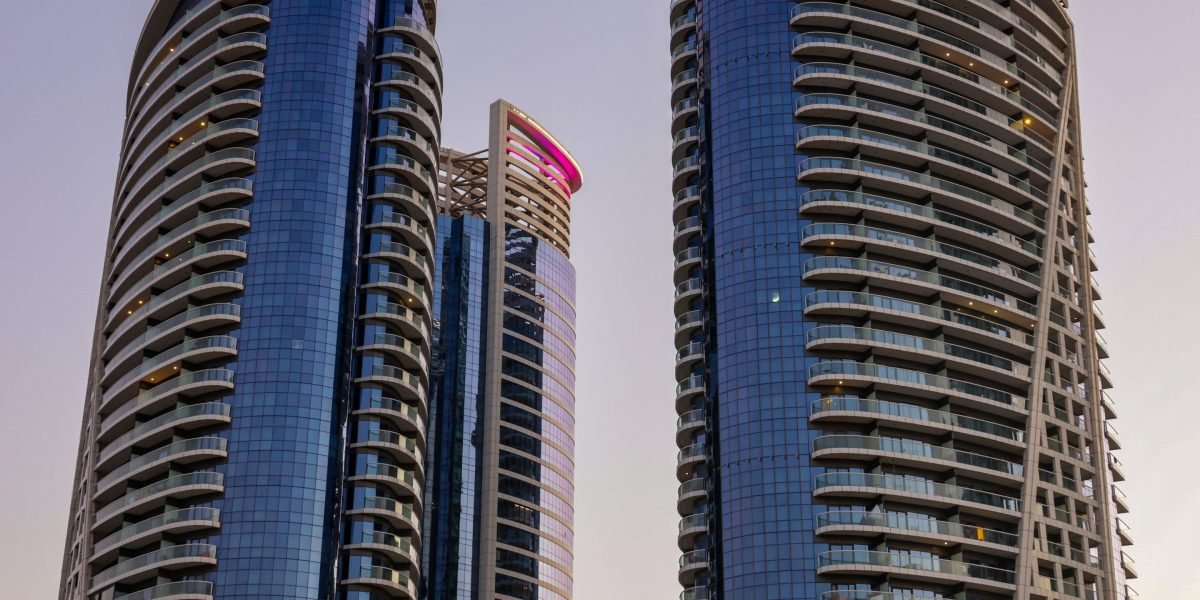
And the future looks even brighter. New developments are adding more luxury and lifestyle value. In early 2026, the Serenia Living project by Palma Development was handed over on schedule. This AED 3 billion project includes four towers with 226 residences, direct private beach access, and amenities like a giant swimming pool and a padel court. Projects like this raise the bar for the whole community. They also prove that developers believe in the long-term appeal of Palm Jumeirah.
Thinking about buying here? You will want a clear strategy. Our detailed guide on Palm Jumeirah property guide 2026 how to buy your dream home walks you through everything from pricing to paperwork. It helps you make a confident move.
The bottom line is simple. Palm Jumeirah offers a rare mix of exclusivity, strong rental yields, and long-term capital growth. That combination is hard to beat anywhere in the world. Whether you want a vacation home or a serious investment, this island deserves a close look.
Are you ready to explore your options? FREE Dubai Real Estate Consultation Connect with Ayaz Salman for a free consultation and get personalized advice on buying in Palm Jumeirah.
Analyzing Rental Yields and Capital Appreciation
Now you know why Palm Jumeirah is so desirable. But let’s get into the numbers that really matter: what kind of returns can you expect? If you are looking for a solid income stream and long-term growth, this island delivers.
First, rental yields. Palm Jumeirah villas typically earn between 4% and 6% annually. That might sound modest compared to some mid-market communities where yields reach 7% or more. But here is the thing: luxury properties on the Palm attract high-quality tenants who stay longer and pay premium rents. Vacancy is low. And those yields are strong for the ultra-luxury segment. For context, the average rental yield for villas across all of Dubai in April 2026 was 4.98%, according to the average rental yield for villas Dubai 2026 report by Engel & Völkers. So Palm Jumeirah sits right in that range, proving it is not just a trophy address but a genuine income generator.
What about capital appreciation? Over the last five years, Palm Jumeirah properties have seen steady price growth. Even during market slowdowns, values here recovered faster than in most other neighborhoods. That is why many experts highlight Dubai as a top global market for investors. The Dubai real estate investment advantages 2026 article from PropertyFinder explains that Dubai consistently outperforms cities like London and New York, where yields often sit between 2% and 4%. When you look at the whole picture, Palm Jumeirah gives you both a decent yield and strong long-term price appreciation.
Of course, not every property on the Palm performs the same. Returns depend on several factors. Size matters: smaller apartments typically yield higher percentages, while large villas may have lower yields but bigger total rental income. View is huge. A villa on the frond with a direct sea view can rent for much more than one with a garden or street view. Proximity to amenities also plays a role, like being close to the Nakheel Mall or the Monorail. The Palm Jumeirah rent guide 2026 from ManageMyProperty shows that a three-bedroom villa on the island can rent for AED 350,000 to AED 550,000 annually. That is serious cash flow.
To get a clearer picture of which property type fits your goals, check out our detailed breakdown of Palm Jumeirah villas 2026 prices demand and buying guide. It covers the differences between villa sizes and locations.
When people ask about the risk of buying property in Dubai, Palm Jumeirah is one of the safest answers. It offers a rare mix of stable rental income and steady capital appreciation. That combination makes it a smart choice for serious investors in property UAE in 2026.
Understanding Dubai Property Laws and Ownership Options
Now that you have a feel for the returns, let’s talk about the legal side. Is it safe to buy property here as a foreigner? The short answer is yes. Dubai has clear laws that protect investors. And the rules are friendlier than ever in 2026.
The most important thing to know is that Dubai created freehold zones.
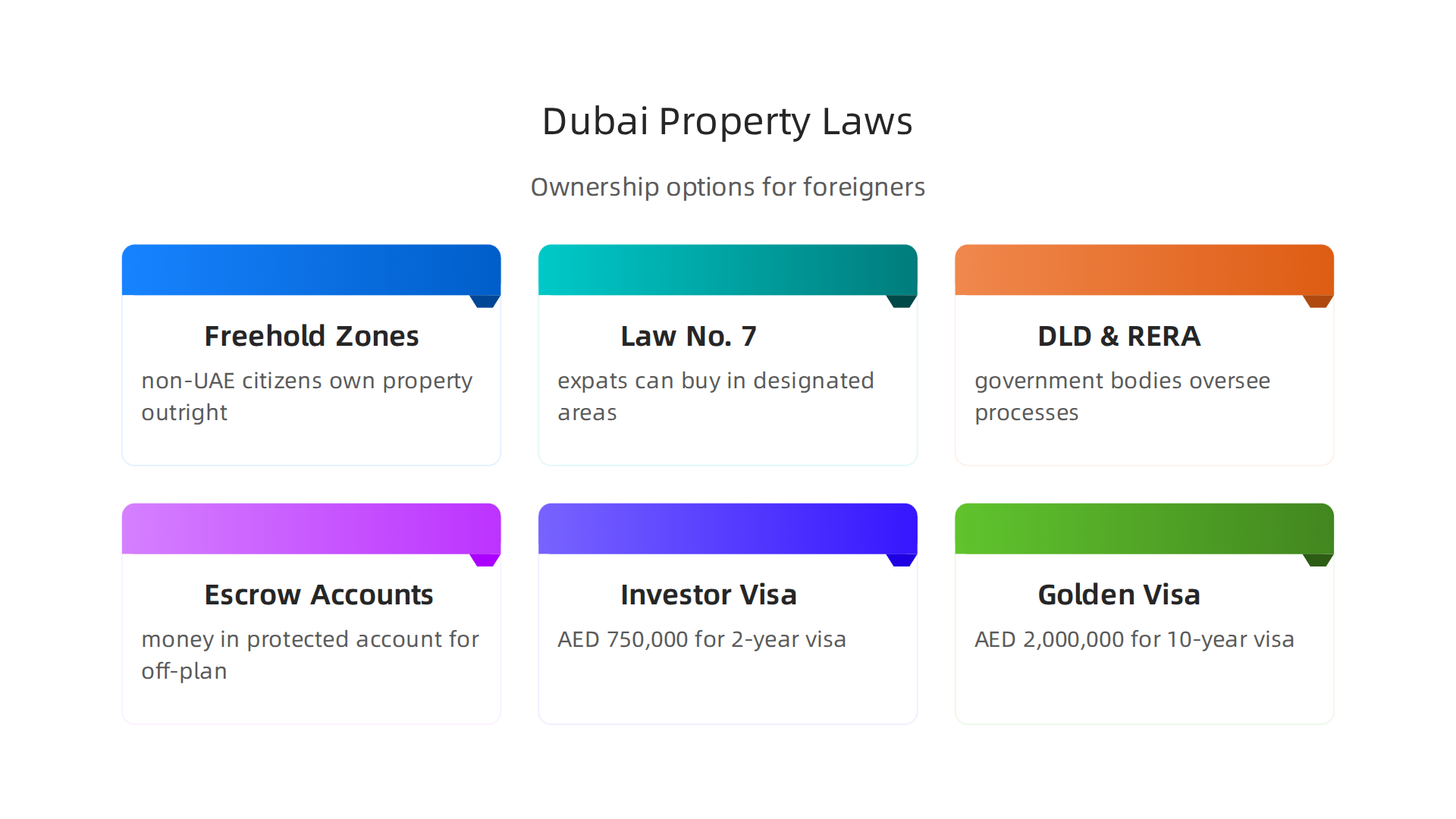
These are areas where non-UAE citizens can own property outright. Palm Jumeirah sits right at the top of that list. Before 2006, foreigners could not own land in Dubai at all. But Law No. 7 changed everything. Now expats can buy and own properties in designated freehold areas just like locals. You can read the full details in this complete guide to Dubai real estate laws.
There are two main ownership types to understand. Freehold gives you full ownership of the property and the land it sits on, forever. Leasehold gives you the right to use the property for a set period, usually up to 99 years. Both are valuable. But for most people looking at Palm Jumeirah, freehold is the route that makes the most sense. It gives you the strongest rights and the best resale value.
Another big plus is the Dubai Land Department and RERA. These government bodies oversee every step of the process. Developers must register their projects, use escrow accounts for off-plan purchases, and follow strict rules. That escrow account is key. When you buy off-plan, your money goes into a protected account. The developer can only access it as construction milestones are met. This reduces the risk of buying property in Dubai significantly.
One more thing worth knowing: if you invest AED 750,000 or more, you qualify for a two year investor visa. And if you invest AED 2,000,000 or more, you can get a 10 year Golden Visa. That makes investing in property UAE even more attractive for those looking to live here or have a secure second home.
If you want a step by step walkthrough of the whole process, check out our detailed foreigner property ownership guide. It covers everything from finding a property to getting your title deed.
Understanding the legal landscape is a big part of making a smart investment.

Once you feel confident about the rules, you can move forward with peace of mind.
FREE Dubai Real Estate Consultation
Financing Your Luxury Property Investment
Many high net worth buyers pay for their Palm Jumeirah home in cash. It is quick and gives you the strongest position when negotiating. But you do not have to pay all cash to buy a luxury property here. In 2026, getting a mortgage for a property UAE as a foreigner is much easier than people think.
Local banks offer loans to non-residents. The loan to value ratio is usually between 50% and 75% for luxury properties. Your down payment will likely be 35% to 40%. This is higher than the 20% that residents pay. But it still lets you borrow a good amount of the total value. You can read more about the specific requirements in this detailed look at the Dubai mortgage for non-residents process.
The paperwork is simple. You need a valid passport, bank statements from the last 6 to 12 months, and proof of income like tax returns. Interest rates for non-residents in 2026 start around 4.25% and can go up to 6%. It depends on the bank and your personal profile. For a full walkthrough of rates and steps, watch this YouTube guide on getting a mortgage in Dubai in 2026.
Beyond regular bank loans, many wealthy buyers use alternative financing. Family offices, private wealth managers, and structured investment funds are very common in the luxury market. These options help spread the risk of buying property in Dubai and often offer better terms for large purchases. They also give you more privacy and flexibility than a standard bank mortgage. This is especially helpful if you are buying multiple properties or want to keep your cash invested elsewhere.
Knowing your financing options helps you act fast when you find the right home. It is smart to stay updated on UAE property prices and Dubai real estate news so you know what your money can get you. For a clear picture of current listings and values, take a look at this Palm Jumeirah real estate 2026 prices trends and buying tips guide. Once you have your financing lined up, you will be ready to make a confident offer when the perfect property comes along.
Step-by-Step Guide to Purchasing Property in Palm Jumeirah
Now that your financing is ready, let’s walk through the buying process.
It is simpler than you might think when you know the right steps.
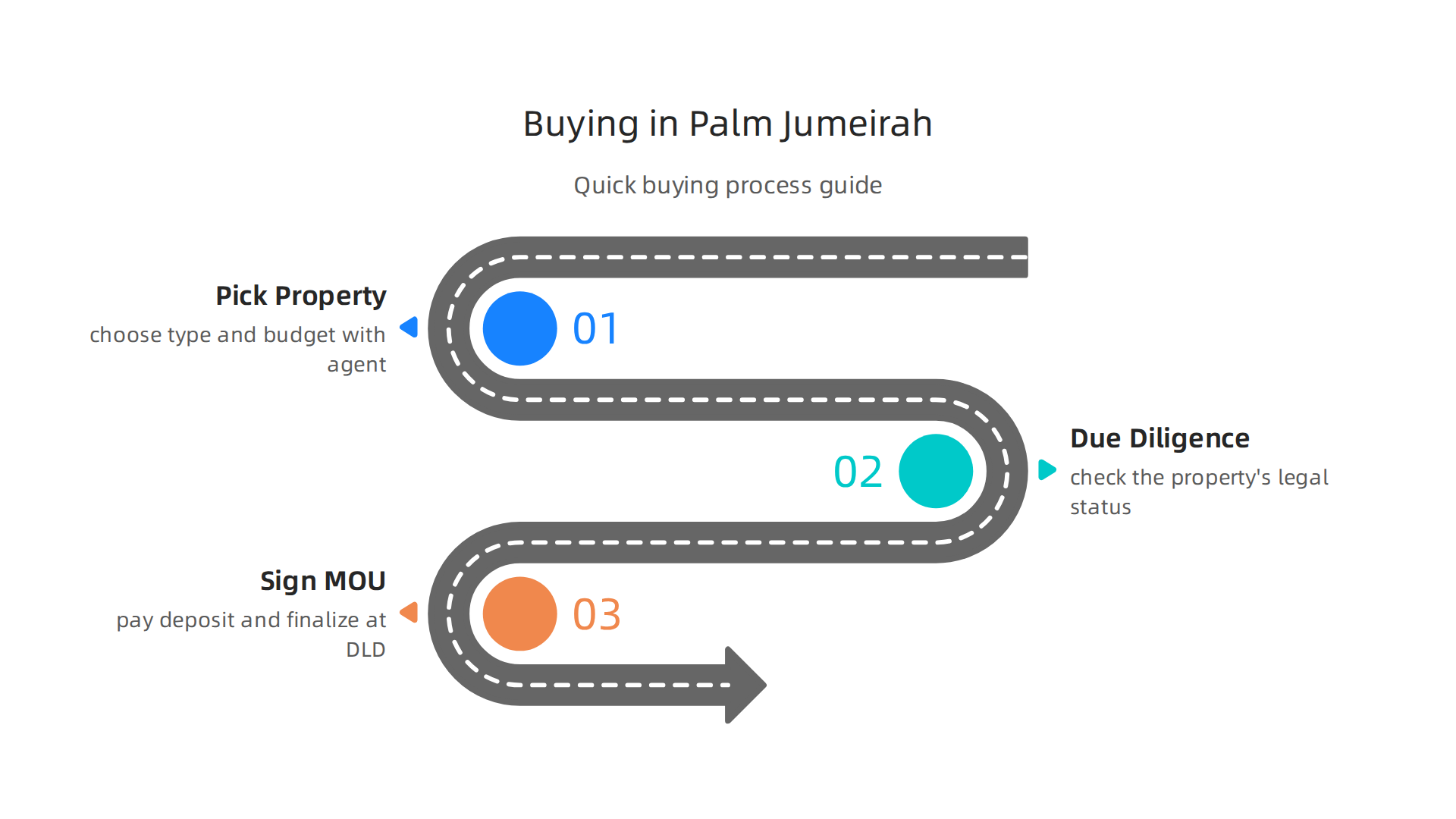
Step 1: Pick Your Property Type and Budget with a Specialist Agent
Palm Jumeirah offers everything from three-bedroom apartments to sprawling seven-bedroom villas on the fronds. Each type has a different price point and lifestyle feel. A good local agent helps you narrow your search fast.
They know which buildings have the best sea views and which frond communities offer more privacy.
Working with someone who specializes in Palm Jumeirah saves you time and helps you avoid common mistakes. For a full overview of what to expect at each price level, check out this Palm Jumeirah property guide 2026.
Step 2: Do Your Due Diligence
Before you make any offer, you need to check the property’s legal status. This means looking at the title deed to confirm who owns the property right now. You also want to see the ownership history and check for any encumbrances like loans, liens, or outstanding service charges.
The Dubai Land Department (DLD) and the Real Estate Regulatory Authority (RERA) make this information public. You can look up a property’s details online to verify everything is clean. This step protects you from financial surprises later. The official rules and regulations from the DLD outline all the legal requirements for property transfers in Dubai.
Step 3: Sign the MOU and Pay the Deposit
Once due diligence is clean, you and the seller sign a Memorandum of Understanding (MOU). This is a legally binding document that states the sale price, payment terms, and handover date. You then pay a deposit of about 10% to secure the property.
After signing, both parties go to the DLD office (or use the online system) to finalize the transfer. You pay the 4% DLD transfer fee based on the property value, plus a small admin fee. Your agent will also charge a commission, usually 2%. Once the DLD registers the property in your name, you officially own a piece of Palm Jumeirah.
The whole process from offer to keys can take one to three weeks if everything goes smoothly. To make sure it does, you may want an expert guiding you through every step. If you are ready to move forward, get your FREE Dubai Real Estate Consultation with Ayaz Salman today.
Summary
This article is a practical, data-driven guide for high-net-worth buyers considering UAE property in 2026, with a special focus on Palm Jumeirah. It summarizes recent market momentum — including record January 2026 sales and forecasted 3–5% price growth — and explains why Palm’s scarcity, luxury inventory, and strong rental demand make it a premier choice. You’ll find median price benchmarks, typical rental ranges, expected yields, and recent high-end project examples that illustrate where value is concentrated. The guide covers the legal framework for foreign buyers, ownership types, visa thresholds, and how government safeguards like escrow accounts reduce risk. It also walks through realistic financing options, deposit and loan-to-value expectations for non-residents, and the practical steps from offer to title transfer. Read this to understand returns, legal protections, financing routes, and an actionable buying checklist to move confidently on Palm Jumeirah.